Before the First Snow: A Massachusetts Homeowner's Checklist
A practical two-weekend checklist for getting a Massachusetts house, driveway and household ready for winter, in the order that actually saves you grief.
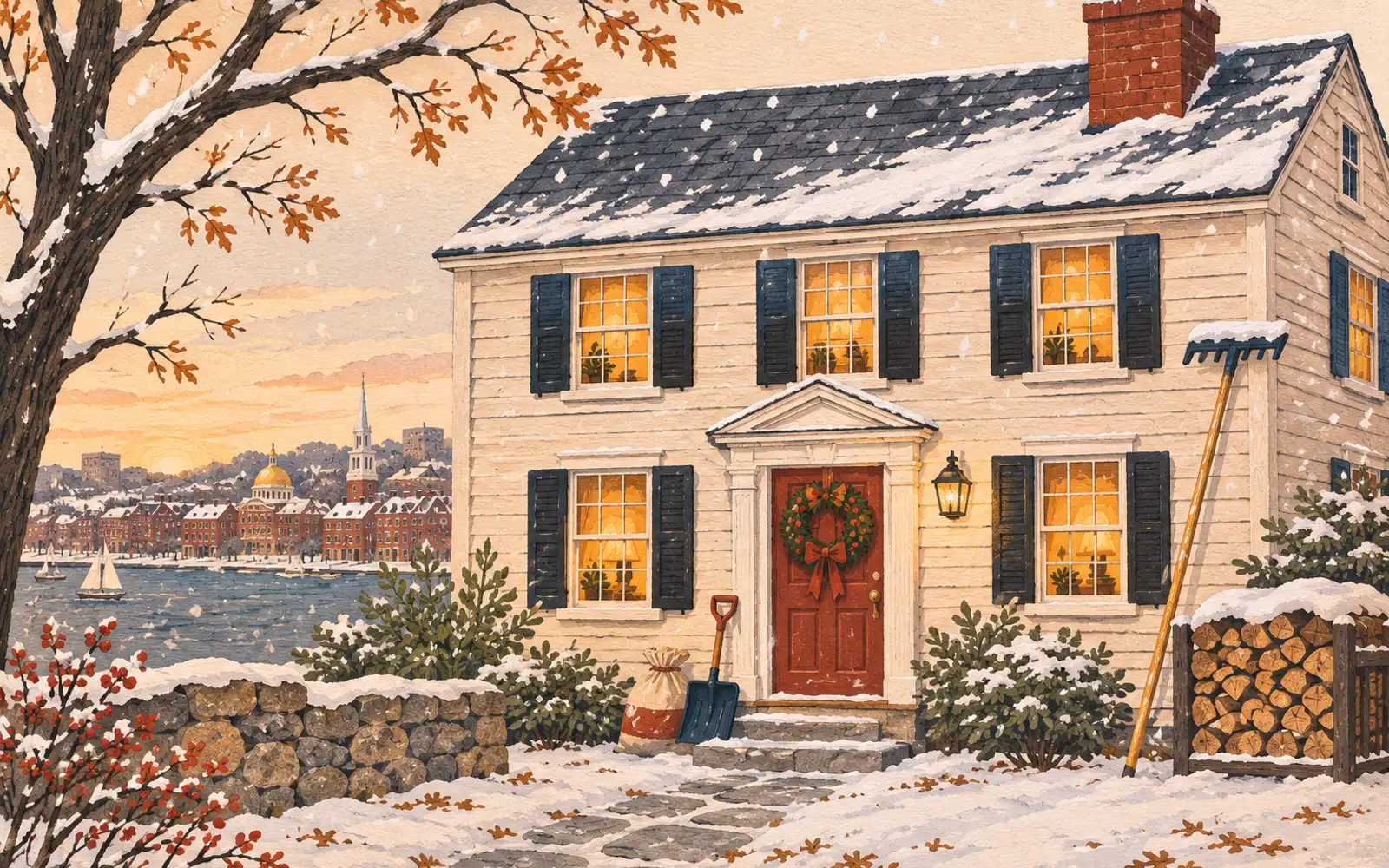
The first real snow in Massachusetts has a way of arriving on a Tuesday night with a forecast that said “flurries.” That is the wrong moment to learn where the shovel is, or that the roof rake went to a neighbor three winters ago.
This checklist is built to be done over two weekends in November, ordered by what is hardest to fix once the weather turns. Nothing here is exotic. It is the unglamorous prep that decides whether the storm is a nuisance or a repair bill.
Weekend one: the house itself
1. Test every alarm, then change the batteries that need it
Winter is peak season for house fires and for carbon monoxide, because furnaces, space heaters and fireplaces all run at once. Press the test button on every smoke and carbon monoxide alarm, and replace batteries in any that chirp. Alarms have a lifespan, and the date is stamped on the back. Check the label and replace any alarm that is past the manufacturer’s date.
Under Nicole’s Law, Massachusetts requires CO alarms in homes that have fuel-burning equipment (oil, gas, wood or coal) or an attached or enclosed garage, generally on every level, so this is not a place to guess. Your local fire department can tell you exactly where alarms need to go in your home.
2. Get the furnace or boiler looked at
If a service call is on your list, do it now. HVAC companies book up the first cold week, and a tune-up is a fraction of an emergency visit on a January night. While you are at it, change the filter, bleed radiators if you have them, and know where the shutoff for your heating system is.
3. Clean the gutters one last time
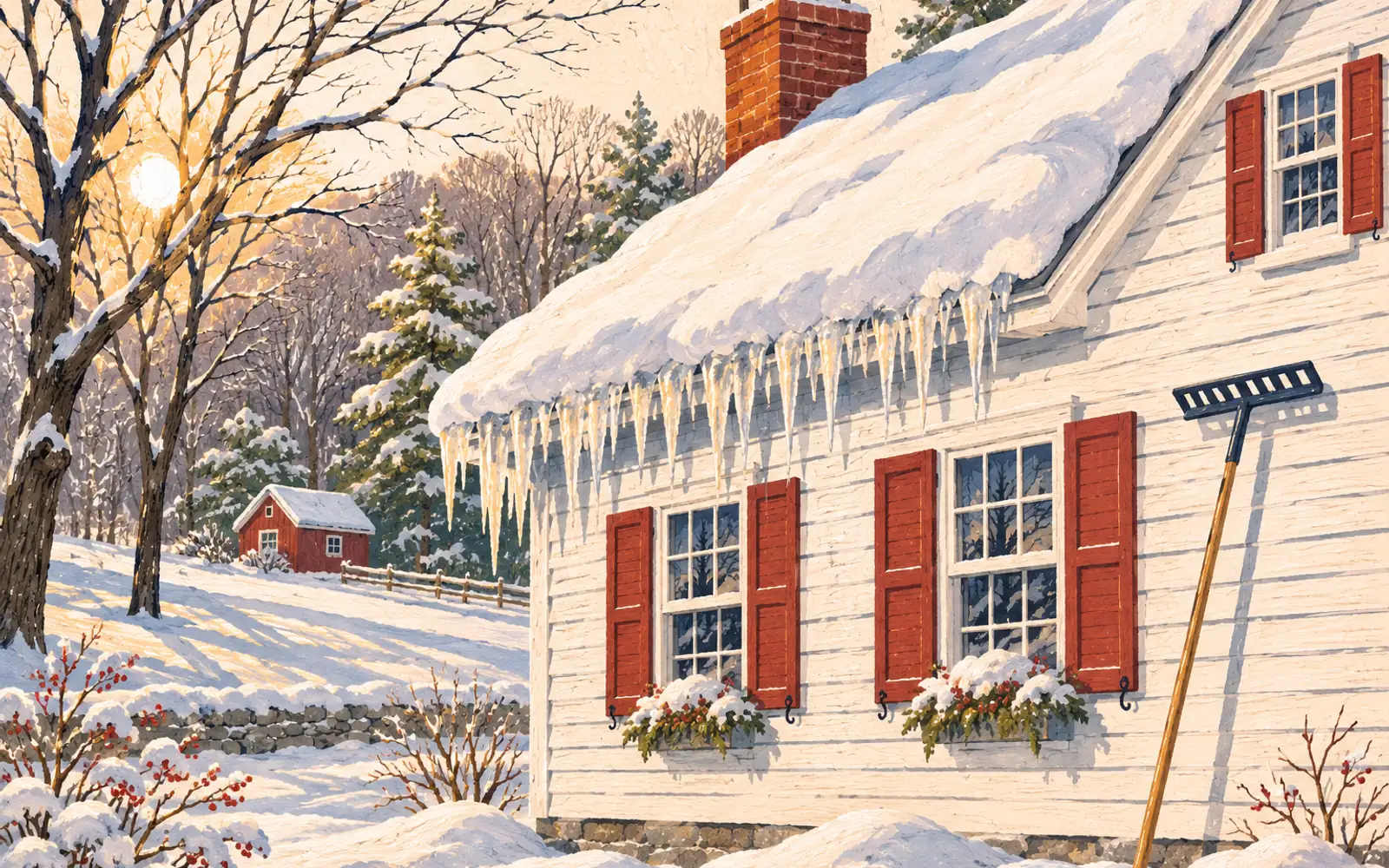
Once the leaves are down and before the first freeze, clear gutters and downspouts. Clogged gutters hold water that freezes, adds weight to the roof edge, and makes ice dams worse. Check that downspouts discharge several feet from the foundation.
4. Look at the roof from the ground
You do not have to climb up. With binoculars or a phone camera, look for missing or lifted shingles, damaged flashing around chimneys and vents, and sagging at the eaves. If anything looks off, call a roofer now rather than after a storm. For the full ice dam story, see our ice dams explainer.
5. Seal the obvious air leaks
Walk the house on a windy day with the back of your hand. Gaps around windows, doors, attic hatches and basement rim joists leak heat, and the heat that leaks into the attic is what melts snow on your roof. Weatherstripping and caulk are cheap. For a bigger picture, Mass Save offers home energy assessments, and the state’s heating-efficiency programs are a good starting point if you plan any insulation work.
6. Disconnect and drain outdoor water
Detach garden hoses, shut off exterior spigots from the inside if you have a shutoff, and drain irrigation lines. A frozen spigot can split a pipe inside the wall, and you will not find out until it thaws.
7. Protect pipes in cold corners
Pipes on exterior walls, in unheated garages, crawlspaces and under kitchen sinks are the ones that freeze. Insulate what you can, open cabinet doors during hard freezes, and know where the main water shutoff is before you need it.
Get home guides like this every Thursday
Free. One short email a week, unsubscribe in one click.
Free bonus when you join: the printable December plan. Unsubscribe in one click.
Weekend two: the driveway, the sidewalk and the gear
8. Find your tools and test them
Locate the shovel, ice scraper, roof rake and snow blower. Run the snow blower now with fresh fuel (or a charged battery), because an engine that sat all summer is a classic first-storm failure. Buy a spare shear pin and a bag of rock salt or an alternative before they sell out. A plastic shovel and a metal edge each have a use, so a couple of options help.
9. Mark the edges of the driveway
Pound reflective stakes along driveway edges and any walkway corners the plow could catch. They also help you remember where the lawn is when everything is white.
10. Know your street’s parking rule
Many Massachusetts towns ban overnight street parking in winter, and many more ban parking once a snow emergency is called. The rules differ by town and sometimes by side of the street. Check yours in our breakdown of what 43 towns’ snow rules show, and sign up for your town’s alert system, because bans are often announced by phone alert.
11. Learn your sidewalk deadline
Many cities and towns give you only a few hours after the snow stops to clear the sidewalk. Boston’s rule is within three hours after the snow stops, or three hours after sunrise if it snowed overnight. Rules in other towns differ. Our sidewalk rules by town lists them. Pushing snow from your driveway into the street is also banned in some towns, so do not clear the driveway by shoving the pile across the road.
12. Locate the fire hydrant, if you have one
If a hydrant is near your property, plan to dig it out after storms. Boston, for one, asks residents to clear snow from hydrants, since a buried hydrant costs the fire department time to find and dig out. Check your own town’s rule.
13. Decide who does the shoveling
Be honest about your capacity. Heavy, wet New England snow is a known cause of cardiac strain, and the first big storm is the worst time to find out your back cannot take it. If you are older, have a health condition or work long hours, line up a neighbor or a plowing service before the storm, not during it. If you would rather hire it out, a local plowing service such as Snow Pass is one place to start.
Household prep that is not on the house
14. Stock a three-day kit
Storms in Massachusetts knock out power regularly. Aim for three days of water (about a gallon per person per day), non-perishable food, flashlights and spare batteries, a battery or hand-crank radio, phone chargers or power banks, medications, and warm blankets. Keep the kit somewhere you can reach in the dark.
15. Plan for heat if the power goes out
Never run a generator, grill or camp stove indoors or in an attached garage, and keep generators well away from windows. These are leading causes of carbon monoxide poisoning after storms. If you own a generator, run it once now to be sure it starts.
16. Check the car
Replace worn wipers, top off washer fluid with a winter-rated mix, check tire tread and pressure (cold air drops pressure), and keep a small kit in the trunk with a scraper, brush, jumper cables, a blanket and a shovel. Keep the tank at least half full during storm season.
17. Sign up for alerts
Register for your town’s emergency notification system and your utility’s outage alerts. These are the fastest way to hear about parking bans, school closings and outages.
A simple order of operations
If you only have an hour this weekend, do these five: test alarms, find the shovel and ice melt, find the roof rake, check your street’s parking rule, and sign up for town alerts. Everything else is worth doing, but those five keep you safe and legal on night one.
Winter in Massachusetts is not a surprise, but it can still catch you out. An hour of prep in November is worth a lot more than five hours of improvising in a storm.
Get home guides like this every Thursday
Winter prep, rebates and the practical chores, one useful guide a week.
Free bonus when you join: the printable December plan. Unsubscribe in one click.
Sources
- Mass.gov: Ice dams two-page fact sheetmass.gov
- City of Boston: Rules for clearing snowboston.gov
- City of Boston: Snowboston.gov
- Mass.gov: Carbon Monoxide Safety Guide (Nicole's Law)mass.gov
- Worcester Fire: Smoke and CO detectorsworcesterma.gov
- Mass Save: Home Energy Assessmentsmasssave.com
Details such as dates, hours and prices come from the sources above and can change. Check with the organizer before you go.