Ice Dams Explained: Why They Form on New England Homes
What actually causes ice dams, why roof raking helps, what to do when one forms, and what to avoid. The fix lives in the attic, not on the roof edge.
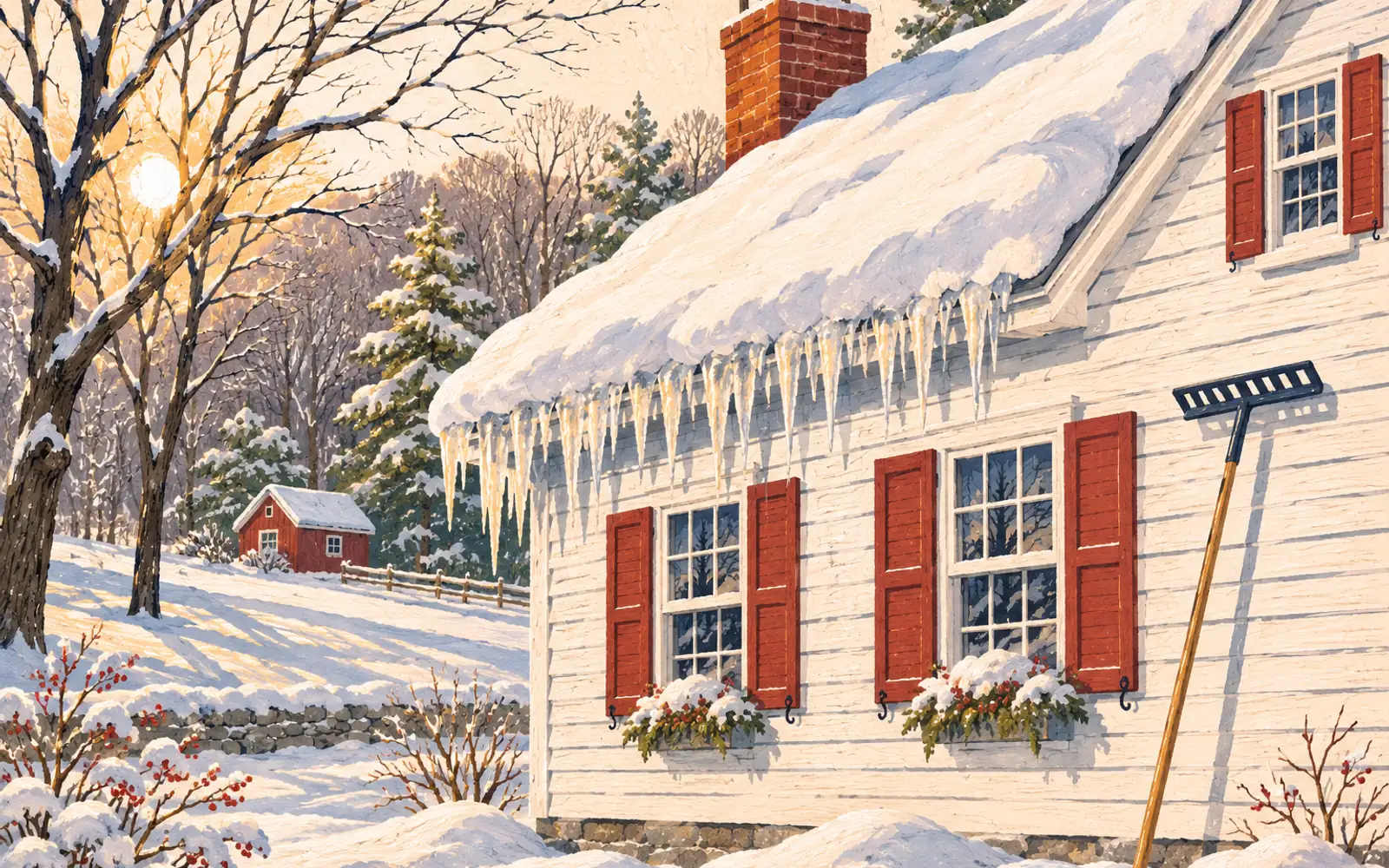
Every few winters, Massachusetts has the kind of snow-then-freeze pattern that puts a ridge of ice along the roof edge and a brown stain on a bedroom ceiling. The roof is not defective. In most cases the house is simply leaking heat into the attic, and the ice dam is the symptom.
Understanding why they form makes it easier to decide what is worth doing before winter, what is worth doing during a storm, and what to leave alone.
How an ice dam forms
An ice dam needs three things at once, according to the state’s ice dam fact sheet: snow on the roof, outside temperatures below freezing, and a roof deck that is above freezing in places.
Here is the sequence. Warm air from the living space leaks into the attic through gaps around lights, hatches, chimneys, plumbing and wiring. That warmth heats the underside of the roof deck. Snow sitting on the warm part of the roof melts. The meltwater runs down the roof until it reaches the overhang, which has no warm house beneath it, so it is as cold as the outdoor air. There it refreezes. Layer by layer, the ice builds into a ridge. Meltwater behind the ridge has nowhere to go, pools, and can back up under shingles and into the house.
That is why the same house can have an ice dam on one side and not the other, or over a leaky bathroom fan and not over a tight bedroom. Sun, roof pitch, chimneys and complex rooflines all change the pattern. The common thread is a warm roof deck under snow.
Warning signs
- Icicles 2 to 3 inches thick or more at the eaves, which can signal dams forming.
- A band of ice along the gutters or overhang, especially where snow on the roof is melting higher up.
- Water stains on ceilings or walls near exterior walls, damp insulation, or peeling paint after a thaw.
- Snow that melts off in patches over the heated part of the house while other roofs stay white.
Prevention: fix the cause in the attic
The reliable cure is a cold roof deck, which means stopping heat from reaching it. In rough order of payoff:
- Air seal the attic floor. This is the biggest lever. Seal gaps around recessed lights, attic hatches, plumbing and wire penetrations, chimney chases and the tops of interior walls before adding any insulation. Insulation slows heat but does not stop moving air.
- Add attic insulation. After air sealing, increase insulation so the ceiling below stays warm and the attic stays cold. The target depth depends on your climate zone and the existing material, so ask an energy auditor for the number rather than guessing.
- Ventilate the roof. Soffit vents drawing air in at the eaves and a ridge or gable vent letting it out keep the underside of the roof cold. Make sure insulation does not block the soffit vents.
- Vent bath fans and dryers outdoors, not into the attic.
- Consider rubberized underlayment at the eaves when you replace the roof. A contractor in a Boston.com Q&A recommends it about 6 feet up the roof edge, in valleys and on low-pitch sections, as backup protection if water does back up.
In Massachusetts, a Mass Save Home Energy Assessment is the usual first step for an air-sealing and insulation plan, and the program has historically offered incentives for insulation and air sealing. Check masssave.com for the current terms before you plan the project.
Roof raking: how it helps
A roof rake is a long-handled tool with a flat blade that lets you pull snow off the lower part of the roof while standing on the ground. The idea is to remove the snow before it melts and refreezes. The common advice is to clear the first 3 to 4 feet of roof from the edge, soon after it snows, before a dam has a chance to form.
Get home guides like this every Thursday
Free. One short email a week, unsubscribe in one click.
Free bonus when you join: the printable December plan. Unsubscribe in one click.
A few notes:
- Work from the ground and stay clear of the area under the snow you are pulling down.
- Look up first. Power lines, skylights and gutters are all easy to hit.
- Do not climb a ladder onto an icy roof. If a roof is too steep or too high for a rake, hire a professional.
- Raking is a stopgap. If you need to rake every storm, the attic needs work.
- Use a rake with wheels or a plastic edge to reduce damage to shingles.
What to do if a dam forms and water is coming in
Water coming indoors is the point to act.
- Stop the leak inside. Move belongings, put buckets under drips, and if a ceiling is bulging with water, ask an electrician or contractor how to relieve it safely. Photograph everything for insurance.
- Call a roofer who uses steam. Per the same Boston.com contractor, steam is the safest way to remove an ice dam. Companies book up fast in a cold snap, so line one up early in the season.
- In a true emergency, the contractor says that if you cannot wait for a pro, carving channels through the ice about every 2 to 3 feet, stopping well short of the roof surface, lets trapped water drain. Hammers and power washers risk costly damage, so most homeowners should wait for a roofer with a steamer.
What not to do
- Do not hack at the ice with hammers, axes or chisels on the roof surface. You can destroy shingles and flashing, and the roof leaks later.
- Do not use a power washer. It is easy to damage the roof.
- Do not knock down icicles. Falling ice injures people and breaks windows.
- Do not rely on rock salt on the roof. The contractor notes it can keep channels open but can damage aluminum or copper gutters and flashing, and plants below.
- Do not trust cheap heating cable as a fix. The same source says inexpensive hardware-store cable is often not durable, and prefers self-regulating cable with a snow sensor. Even then, cable manages the symptom and leaves the heat loss in place.
- Do not climb onto the roof in winter. Falls from roofs are among the most serious home-maintenance injuries.
A November checklist for ice dam prevention
- Look up at last winter’s problem areas for stains.
- Clean the gutters.
- Check that soffit vents are not blocked by insulation.
- Look at the attic floor on a cold day for frost on the underside of the roof deck, and for dark stains.
- Find the roof rake and check it works.
- Book an energy assessment or a roofer before the rush.
Sources and limits
This is general guidance, not an inspection. We drew on the state’s ice dam fact sheet, the University of Minnesota Extension’s guidance on dealing with and preventing ice dams, and a Boston-area contractor’s published advice. We could not open the University of Massachusetts Extension page directly, so we have not attributed any specific recommendation to it. For insurance questions and any roof work, ask a licensed Massachusetts roofer or your insurer.
Get home guides like this every Thursday
Winter prep, rebates and the practical chores, one useful guide a week.
Free bonus when you join: the printable December plan. Unsubscribe in one click.
Sources
- Mass.gov: Ice dam fact sheetmass.gov
- University of Minnesota Extension: Dealing with and preventing ice damsextension.umn.edu
- Boston.com: Know the ice dam (contractor Q&A)boston.com
- Mass Save: Home Energy Assessmentsmasssave.com
Details such as dates, hours and prices come from the sources above and can change. Check with the organizer before you go.